Taking Bookings — Q2 & Q3 2026

I work directly with your team. When more hands are needed, I bring in senior specialists I have worked with for years.

Unblock Your R&D.
De-Risk Your Engineering.
De-Risk Your Product & Customer's Workflow.

Multi-disciplinary senior specialist support for signal processing, algorithms, In Vitro and In Vivo data collection, and procedure design. In addition to design and implementation, I provide team guidance and together we solve the "worrisome" technical problems stalling your product roadmap. I analyse key areas of risk and work with your team to build robust plans that address not only the technology but also the workflow and adoption challenges — using early prototyping to surface and resolve integration issues before they become expensive.
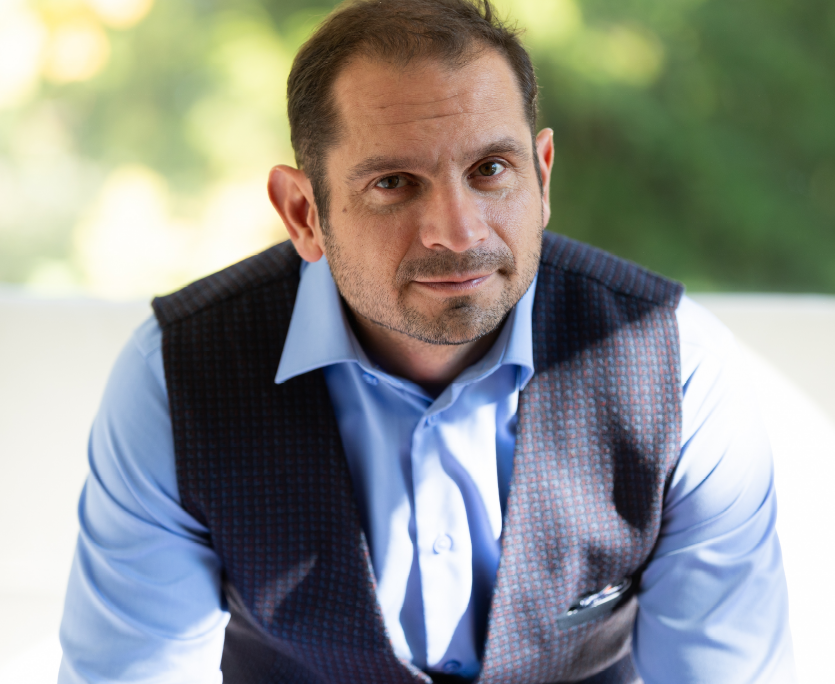
Philip Zeman R.Eng., Ph.D. — Specialist R&D Engineer & Data Strategist

Philip Michael Zeman

B.Eng. (B.Sc.)

Interdisciplinary Ph.D.

Engineering · Neurobiology
Experimental Psychology

Companies I've Worked With

Prolira BV CoraVie Medical Alio Photonics Healthcare Metiris ApS Seeker Solutions Kinsol Research

/// STATUS_CHECK

Waiting until your breaking point is the most expensive way to build.

Your engineering team is likely stretched. The prototype has noise that is slowing or blocking algorithm development. You need training, testing, and validation data but you don't have the experience to make sure the data collected will do the job. This might even be your second attempt to obtain data.

These aren't just technical glitches. They are compound interest on your project timeline. Every week of delay burns runway and credibility.

Common Blockers I Clear:

  • × Algorithm performance is inconsistent across cases and measurements
  • × Lack of In-Vivo data protocols/established relationships with In Vivo facilities
  • × Bandwidth challenges: you're the bottleneck, there's lots to do, and training new employees is slow
  • × Getting to a v1 feels over-complicated or is stalled
  • × Existing expensive data seem unusable
  • × Imperfections in prototype electronics stalling algorithm development
  • × Algorithm changes do not provide the necessary performance needed

Specialist Intervention

Many times I've navigated the messy path from concept to product. I use that experience to identify & solve problems, and guide your team away from dead ends. I use AI LLM methods to come up to speed quickly on problems and to understand existing Gold Standard approaches and improve upon them, and benchmark new solutions. I work with your team of physicists, engineers, and computer scientists, to architect robust systems. I don't just advise; We learn together and we execute.

Relieving Leadership Bottlenecks

Handling execution details so you can focus on high-value decisions. Increasing bandwidth by working across disciplines to meet company objectives.

Signal Processing

Noise reduction, filtering, and optimizing signal chains for hardware prototypes and later revisions.

Algorithm Design

Developing, training, testing, and validating algorithms to extract actionable metrics from complex datasets.

Data Strategy

Designing In Vitro & In Vivo protocols. As needed, I work directly on site, in the clinic, or OR, to ensure data gathered are exactly what the algorithm team needs.

The "Turnkey" Engagement

I am not a distant freelancer. I operate as a plug-and-play senior team member, removing the administrative and logistical friction of hiring — so we can start the working relationship in a low-risk, low-overhead way.

  • On-Premises Presence: I travel to your facility bi-weekly, or as needed for team cohesion and data collection. Daily video meetings / stand-ups that fit your timezone. You get face-to-face collaboration.
  • Zero-Friction Logistics: I handle my own visas, travel, and accommodation.
  • Contracting Ready: Standardized NDA and SOW processes. Ready to start Day 1.
  • Context and Company Culture Aware: You've shaped the culture of your company. I work with the team rather than disrupt them.

/// THE CANADIAN ADVANTAGE

Hire senior expertise while maximizing your budget. As a Canadian resident operating through my Canadian Corporation I offer significant financial leverage for International (ie, US & European) entities.

For International Clients Leverage favorable exchange rates to lower effective costs without compromising quality. EURO/CAD = 1.6 multiplier. Leverage Canadian R&D Grants (up to 30 – 40%). The sum effectively reduces costs by nearly 50%.

/// SOLO BY DEFAULT · SCALABLE ON DEMAND

Most engagements begin and end with me, personally embedded in your team. When scope demands parallel hands, I assemble a small bench of senior Canadian specialists — in signal processing, sensor algorithms, and machine learning — drawn from partner firms I have worked with for years.

No Generalists. No Offshore. Bench members are specialists in the same disciplines I am — never generalist software developers. I remain your single point of accountability and the IP-holder regardless of team size.

Technical Case Studies

Select a project to view the Problem, Action, and Impact.

Problem Statement

EEG-data based University prototypes for detecting markers of Clinical Delirium worked in ideal conditions, but were not robust to be successful in hospital environments. Further, the existing university studies lacked the datasets and analysis needed to meet CE and FDA approval requirements.

Role

Senior Algorithm Engineer and the 3rd person joining the company: to "translate" a university prototype technology so that it would work in real-world settings and to generate the robust performance necessary for FDA/CE approval.

Action

I transitioned the technology from Fourier-based analysis to a Wavelet architecture to facilitate classification and artifact removal methods. I created a strategy to detect garbage data (no-decision) when present. I developed ways to, in real-time, estimate how much additional data are needed to provide classification output. I provided the team with necessary clinical subgroup and performance data to achieve CE and FDA approvals.

Impact

Achieved FDA (USA) and CE (Europe) approval for a commercial hospital product. The product minimised "Decision Energy" for clinical staff by providing automated Clinical Delirium identification to an accuracy that is statistically indistinguishable from the current Gold Standard.

Problem Statement

Identifying and tracking arterial vessel walls in real-time ultrasound data is hindered by tissue motion and low Signal-to-Noise Ratios (SNR), making automated blood pressure estimation unreliable. Further, dynamics of vessel rigidity add challenges to creation of a reliable model for blood pressure.

Role

Senior Algorithm Engineer and 4th person to join the company: to create the foundational IP for automated blood pressure monitoring using ultrasound and validate the physics model through In Vivo animal studies. To create an automated way to detect the location of arterial vessel walls, measure their movement, and estimate blood pressure from ultrasound data.

Action

I established the IP base by creating a 100% automated algorithm for vessel wall identification and tracking in M-mode data. Using their previously collected In Vitro and In Vivo data, I proposed and implemented an initial algorithm to automatically find and track vessel wall movements. I created a data processing pipeline suitable for statistically comparing the performance of algorithm changes and dataset variations, for both In Vitro and In Vivo data. Using an empirical model, I demonstrated how error in the measured quantity relates to error in the desired estimated value, blood pressure. In preparation for collecting In Vivo Ovine data, I with the team and the OR Veterinarian and staff created a robust data collection protocol, and accounted for challenges collecting data in the OR. I additionally joined the team in the OR to ensure the quality and viability of collected data.

Impact

Positioned the company for rapid algorithm iteration by delivering a custom data processing pipeline and validated Ovine data within 6 months. Created a strategic IP moat around automated vascular health quantification.

Problem Statement

Reliable acquisition of clinical-grade vitals (like Potassium, SpO2, and Heart Rate) from a single wearable patch on ambulatory dialysis patients is historically compromised by motion artifacts and low signal fidelity.

Role

Senior Algorithm Engineer: brought onto the team to facilitate communication between the "deeply talented" ML team and the product team. Additionally, to provide assistance with strategy development, determining approach feasibility, prioritizing work, and DSP assistance.

Action

I led weekly progress presentations helping the technical team communicate their accomplishments/challenges and helped the business and technical teams coordinate next steps and IP development strategies. I created wavelet-based methods to process acoustic sensor data to isolate features of an ECG-like signal obtained over large vessels with the goal of parameterizing these features to determine vessel health. I assisted the team in obtaining more useful PPG features by providing a baseline removal algorithm (outperforming Butterworth filters or other standard methods) suitable to remove very large momentary events and baseline wonder without compromising target event characteristics. My knowledge and methods augmented purely machine-learning based methods to isolate the desired signals. I created and implemented adaptive filtering techniques for feature extraction in non-stationary noise and signal environments.

Impact

The interaction among the teams shifted to a "learn together in baby-steps approach" and collaboration increased. Introducing DSP methods to the "highly technical ML team" reduced ambiguity with which they were faced, gave them extra tools, and could more easily determine the impact of their algorithms.

Problem Statement

The team faced technical hurdles in isolating photonic emissions related to mitochondrial oxygen uptake from multiple interfering noise classes, stalling performance milestones.

Role

Senior Signal Processing/Algorithm Specialist and 5th person to join the company: to unblock the engineering physics team by solving complex signal-to-noise ratio issues and noise-source unmixing that were stalling feasibility demonstrations.

Action

I implemented methods to address various noise classes and unmix data to isolate target photonic signals. I guided the use of In Vitro/In Vivo data collection and repeated measure statistics to create "tight-cycle" DSP and algorithm comparisons instead of 1-off measure-analysis iterations.

Impact

The company demonstrated product feasibility roughly a month after I joined the team. They now possess a validated v1 algorithm and an objective process for comparing signal processing and algorithm iterations to drive engineering decisions.

Problem Statement

The firm required a robust tele-medicine prototype capable of high-fidelity scalp EEG acquisition and remote data acquisition/patient behaviour monitoring to facilitate a geographically distributed patient assessment and intervention team.

Role

Technical Lead & Systems Architect and 4th person to join the company: to assist with project road-map and leverage GNU sources to design and build a low-latency data transport architecture required for real-time remote biofeedback. To hire team members as needed to complete the job required.

Action

I partnered with Metiris and established a specialized Canadian team to develop software for seamless EEG hardware integration — the same scale-up model I use whenever a client's scope outgrows a single senior specialist. We created a data transport architecture designed to move biosignals across LANs and the internet with the low-latency required for real-time biofeedback and remote patient monitoring. When hardware challenges were encountered, I used my prior electronics technologist training to trace the problem and replace components of the custom EEG hardware

Impact

The company successfully proved product feasibility and demonstrated a fully functional working prototype. This established the foundation for the firm's distributed health product strategy.

Problem Statement

High rates of surgical site infections post-Cesarean section required a low-friction, high-velocity reporting tool to prevent patient complications.

Role

Technical Product Owner working with 2 teams of 6 developers each (joined a company of 50+ people): to translate customer requirements into technical specifications and prioritize the daily work and product roadmap to achieve a compliant MVP.

Action

In my early days with the company, I found that a barrier to success was communication across the company. I resolved this by using the whiteboards throughout the organization to communicate the work underway. When key milestones were met, I spoke in front of the company in my role to communicate the successes and path forward. To fulfill my role, I developed positive peer relationships with the technical teams (together discussing problems and strategies) and developed collegial relationships with the business team.

Impact

Successfully achieved a Minimum Viable Product (MVP) and began plans to deploy it to partners who participated in its development.

Problem Statement

How to increase decision-making bandwidth and technical expertise at relatively low cost?

Role

Senior R&D Consultant & Mentor hired to act as a "Force Multiplier" providing multi-disciplinary leadership and decision making, and senior technical domain-specific expertise in DSP, ML, and Product Design.

Action

I led technology development meetings and facilitated communication between the highly technical team and external stakeholders, I provided new approaches to team and stakeholder interaction. When needed I have provided technical expertise and perspectives. I guided technical strategy decision making.

Impact

Freeing other specialists in the company to work on other projects and priorities while continuing and deepening the relationship among the internal technical team and external stakeholders; advancing the IP portfolio and disseminated skills and expertise.

What Clients & Colleagues Say

Via LinkedIn

"Phil and I worked together when he served as a consultant for a project I led at Kinsol Research for the better part of the last two years. In addition to his expertise, Phil was a pleasure to work with. As a seasoned DSP engineer, he has a unique approach to problem-solving in the medical space and is a strong advocate for solving problems from first principles. His presence on the team helped us avoid the temptation to try new technologies that weren't mature enough for medical applications, ultimately leading to the on-time delivery of reliable and practical solutions to the client.

Perhaps his most important contribution, in my opinion, was his ability to balance technical depth with strong interpersonal skills. He helped us strengthen our relationship with the client while making sure expectations were managed and remained hands-on when needed. In short, Phil has rare qualities that make him a valuable asset wherever he chooses to apply them."

ZE

Zelalem Engida, PhD

Data Scientist, Kinsol Research Inc.

"I greatly enjoyed the opportunity to work with Philip Zeman in his capacity of product owner at Seeker Solutions. In addition to being an excellent individual contributor, he also brought a great sense of enthusiasm that helped energize the business and development teams alike. Within this role, Philip demonstrated his capacity to juggle multiple conflicting priorities and to reconcile them into plans that would guide development work while also meeting business objectives. His ability to communicate this information to technical and non-technical collaborators was extremely valuable in bridging the gap between development and other stakeholders."

JL

Jeremy Long

Software Development Engineer, Microsoft

"Working with Phil has been a great opportunity. He has a multidisciplinary approach to solving technical problems which has taught me a lot about how to work effectively as a team and develop powerful solutions. He brings strong expertise in both technical data analysis and product & business development. He would be a great addition to any team!"

CW

Chris Warren

Software Engineer

"Philip was a proactive and creative member of the team. His in-depth knowledge of healthcare research and use of sensors and data analytics was beneficial to all and very much appreciated. I would love to work with Philip in the future."

CG

Claire De Grasse

Retired Project Manager

Offered Packages

Every engagement is led by me personally. The size of the supporting bench scales with the scope.

/// JUMPING IN TO GET YOU MOVING FORWARD AGAIN

Drop-In Senior Specialist

Initial consultation and Team Lead interview to discuss blockers, followed by defining the structure and the path forward.

/// QUICKLY GETTING YOUR VERSION 1 ALGORITHM

V1 Algorithm & Validation Pipeline

Data collection to Version 1 algorithm and a statistical performance evaluation pipeline: Contact me for a meeting, case study, and presentation.

/// SEPARATING SIGNAL FROM NOISE WHEN THE TARGET IS UNKNOWN

Blind Signal Separation Modelling

Identification of the signal present in the noise and modelling it so that it can be extracted from the noise. This has been used to identify and quantify fine ECG features, and separate and classify brain activity source signals.

/// SEPARATING SIGNAL FROM NOISE WHEN THE SIGNAL IS KNOWN

Signal Separation From Noise

By using signal modelling and noise modelling methods the detailed signal can be isolated. This has been used to extract the fine details of heart beat waveforms from acoustic monitoring of arteries and extract detailed heart beat waveform from EEG.

/// MACHINE LEARNING (AI) TO MAKE DECISIONS FROM DATA

Algorithm Development and Data Analysis

In combination with DSP methods, information is extracted from data, used in combination with models to estimate business-useful values, and/or used to make automated decisions. This is the data-output of a useful and marketable product.

/// DE-RISKING ADOPTION BEFORE YOU BUILD

Workflow Prototypes

Rapidly developing a working prototype interface for the sole purpose of determining the real-world impact on a customer's workflow — before significant time or money is committed to a technical solution.

The prototype answers critical adoption questions early: Does this increase overall complexity and create more problems than it solves? Or does it reduce complexity, increase reliability, and save time? These are questions that cannot be reliably answered on a whiteboard.

I strongly recommend this step before investing heavily in solving any technical problem that will land in someone else's hands.

Rapid Prototypes

Three small experiments. The bigger story: a much faster way to start an R&D engagement.

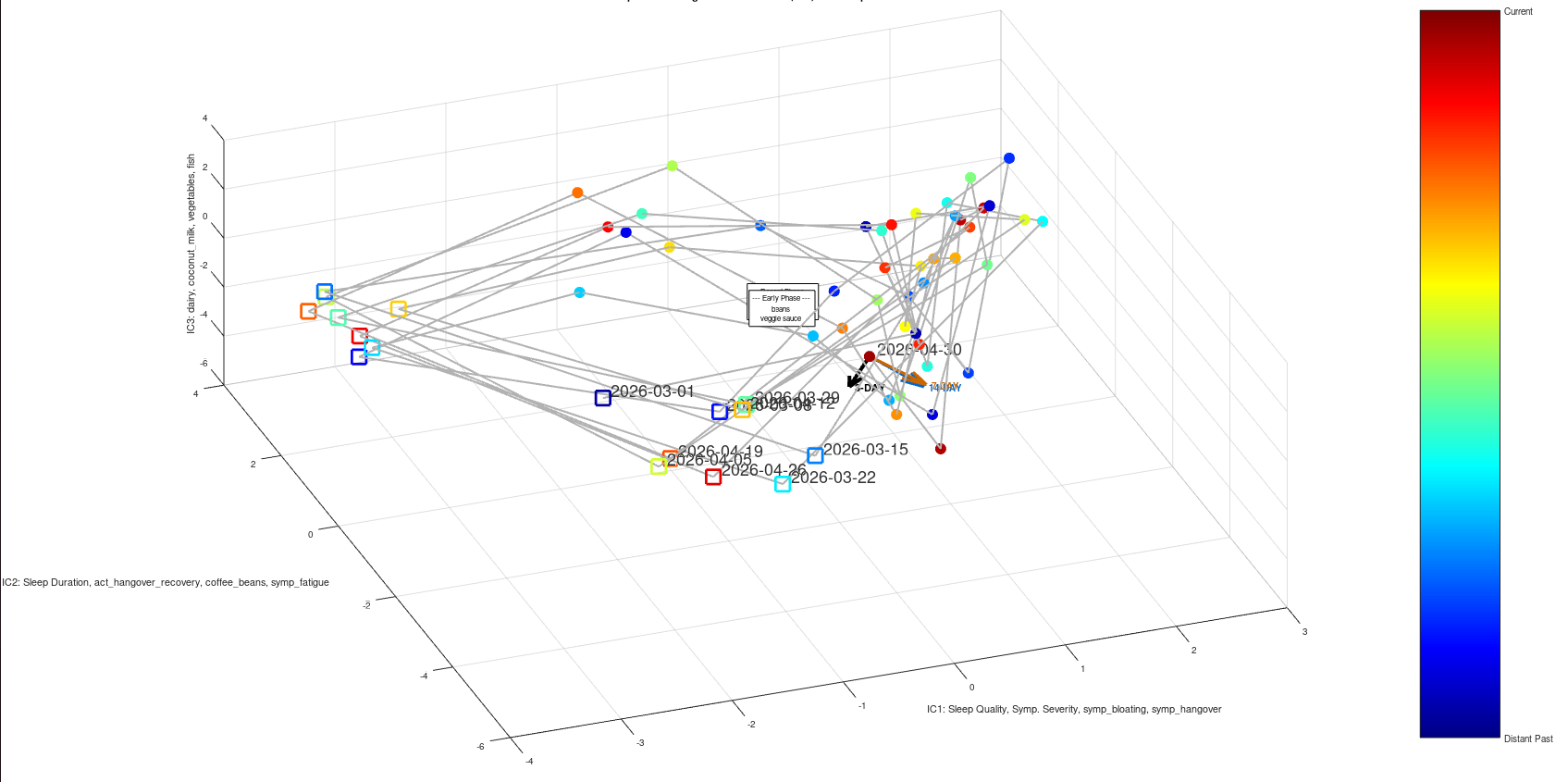
Preview: NeuroAccelerator 3D lifestyle pattern analytics
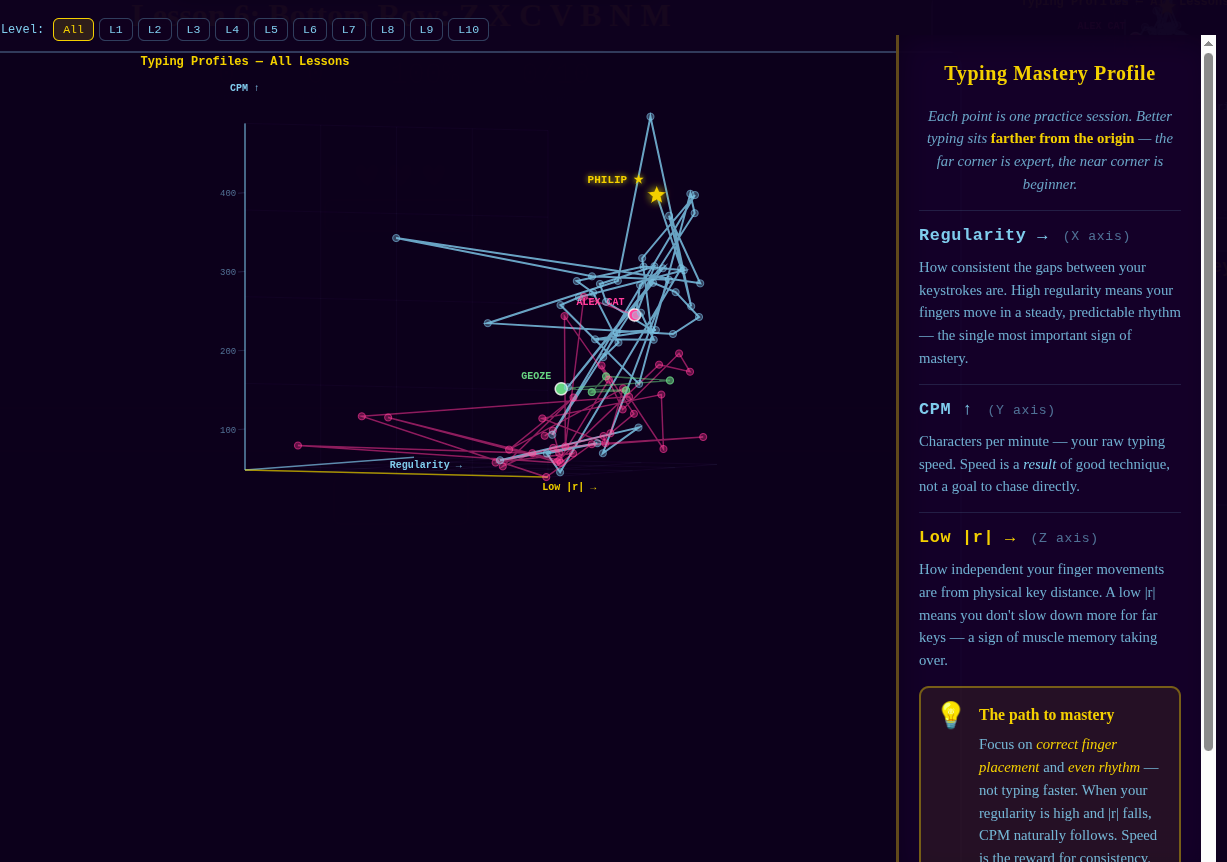
Preview: Typing Mastery Profiler 3D session profile
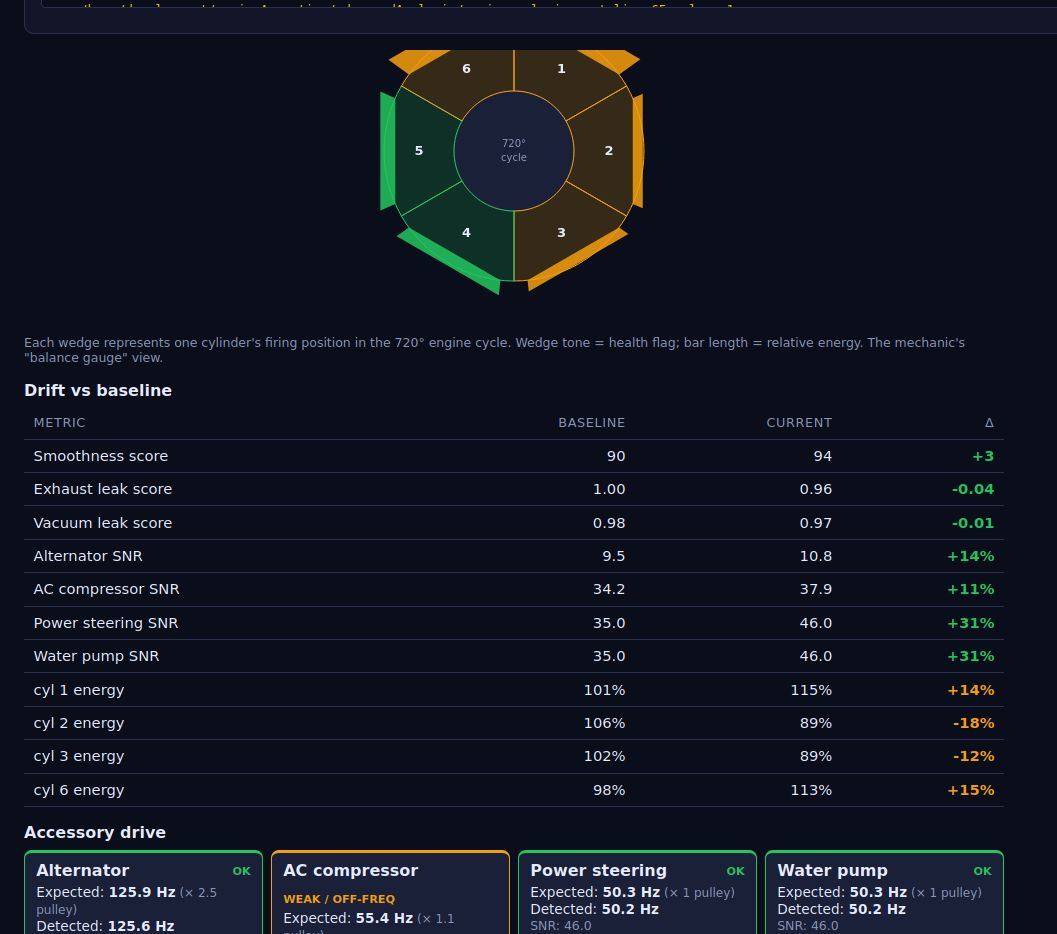
Preview: Xterra engine acoustic monitor — cylinder balance gauge
/// AI-ASSISTED PROTOTYPES

Three working examples. Same toolkit as the case studies.

Personalised health analytics, a 3D typing-mastery profiler, and an acoustic-monitoring app I built for my own Xterra after a mechanic flagged failing ignition coils.

Explore All Three Prototypes

Presentations

Available as custom live talks — remote or in-person.

Each presentation is offered as a custom engagement rather than a fixed deck. Delivered live — remotely or on-site — the format allows the audience to ask questions and steer the discussion toward what is most relevant to their specific context and challenges.

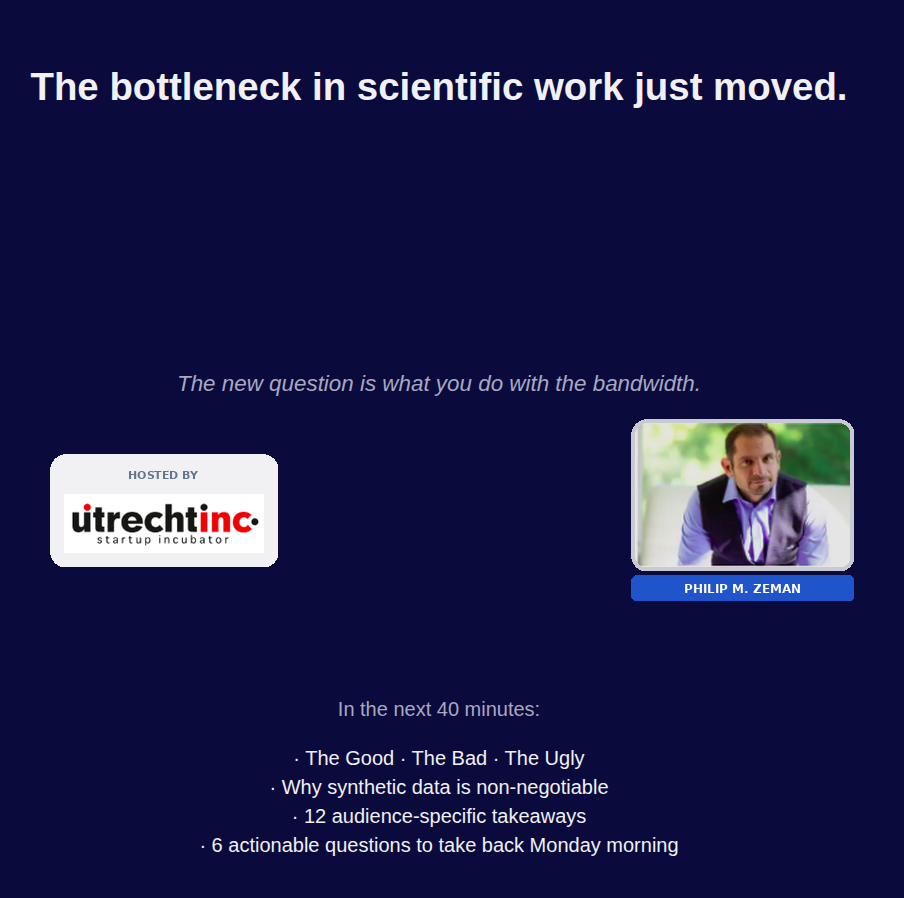
UPCOMING TALK Title slide for the upcoming talk. Headline: 'The bottleneck in scientific work just moved.' Italic subtitle: 'The new question is what you do with the bandwidth.' A 'Hosted by UtrechtInc startup incubator' panel sits on the left and a portrait of Philip M. Zeman sits on the right. Lower text describes the next 40 minutes — The Good, The Bad, The Ugly; why synthetic data is non-negotiable; 12 audience-specific takeaways; 6 actionable questions to take back Monday morning.
/// AI IN R&D — LIVE TALK

AI for Data Processing and Coding: The Good, the Bad, and the Ugly

11 June 2026 · 13:00 Netherlands time (11:00 UTC)

Hosted by UtrechtInc for their member startups — and open to anyone interested. I'll deliver this interactive talk via StreamYard, broadcasting live from Vancouver Island, Canada.

The story of how I have learned to work with AI when designing prototypes and algorithms for medical-device and machine-health-monitoring products — and how that compares to a year ago. The headline: substantial analysis is now possible quickly, real-time prototypes that used to take weeks can be built in hours, and AI-collaboration processes themselves have become reusable assets across projects. The talk is honest about the guardrails and the senior oversight this speed requires.

For CEOs

  • Hiring has changed. Hire for the ability to identify good analytic results, conscientiousness, and creativity.
  • Real-time data quality stops being "too far ahead." Insist on it early — it can now be done efficiently and it informs design.
  • Your competitive moat is your accumulated process, not your code alone.

For Technical Leaders

  • Synthetic ground-truth tests are non-negotiable. Every new algorithm pairs with a known-answer probe.
  • Plots are AI-lie detectors. Examine the pictures, the residuals, the cohort and simulation overlays.
  • Build a memory system from day one. The model is amnestic without it; the memory becomes an organisational asset.

For Investors & Stakeholders

  • Time-to-prototype is collapsing. Time-to-trustworthy is the new metric.
  • AI memory is a new asset class. Track it like one.
  • Consider both Process IP and Code IP. Underwrite the process and the product.

Target audience: startups in biomedical devices and in equipment monitoring for health and fault detection.

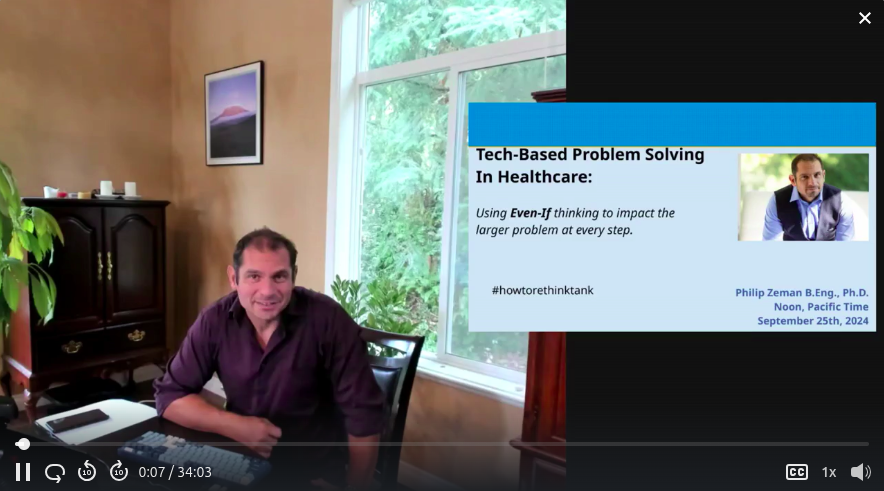
Video thumbnail for Tech-Based Problem Solving in Healthcare — Philip Zeman presenting remotely, slide reads: Using Even-If thinking to impact the larger problem at every step.
/// PRODUCT & DESIGN STRATEGY

Tech-Based Problem Solving in Healthcare

Medical device teams are often so close to their technology that they lose sight of which variables are actually within their control. This talk introduces a structured Even-If thinking framework: a method for identifying which design decisions and company actions genuinely move the needle on whether a product will work and be adopted within the real-world environment in which it is deployed. The approach helps teams avoid over-engineering the wrong problem and refocus effort where it creates the highest likelihood of success.

Request This Talk →
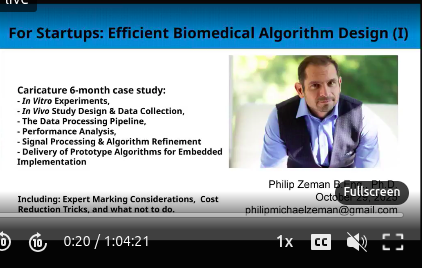
Video thumbnail for For Startups: Efficient Biomedical Algorithm Design (I) — slide lists a 6-month case study covering In Vitro experiments, In Vivo study design, data processing pipeline, performance analysis, signal processing and algorithm refinement, and delivery of prototype algorithms for embedded implementation.
/// ALGORITHM DEVELOPMENT CASE STUDY

For Startups: Efficient Biomedical Algorithm Design

A detailed case study of a 6-month sprint — conducted before the era of modern AI tooling — to take a medical device from concept to a validated version-1 algorithm. The talk walks through the full arc: designing and executing both In Vitro and In Vivo data collection, building the data processing pipeline, iterating on signal processing and algorithm design, and delivering prototype algorithms ready for embedded implementation. Specific lessons learned, cost-reduction strategies, expert marking considerations, and the decisions that accelerated or stalled progress are discussed openly.

Request This Talk →

Custom format, live delivery. Both talks are adapted to your team's domain, stage, and questions. Available as a lunch-and-learn, team workshop, or conference session. Get in touch to discuss →

Let's Address The Problem You Have Right Now.

Taking bookings for Q2 & Q3 2026.

Direct Email: pzeman@clinezeman.com